
The Tallahatchie County Arrest Log
The sheriff's office maintains no multi-day arrest log. There is no weekend roundup, and no public booking history with a defined date range. Advertising a seven-day or monthly view would be guesswork without an official source. So put your request in writing with a stated beginning date and an ending date. Name the records you want from the start.
Start with the Mississippi Sheriffs' Association listing for Sheriff Jimmy Fly at 662-647-3700. Mail goes to P.O. Box 100, Charleston, MS 38921. Remember that Tallahatchie County runs two judicial districts, so your request may land in Charleston or Sumner.
Build a Multi-Day Arrest Search
There is no official page to scroll backward. Create a reproducible request instead.
- Choose a narrow start and end date. Include the next working day when checking a weekend.
- Ask for all jail-docket or booking-log entries received during that range.
- Specify booking time, alleged charge, arresting agency, bond or hold, release or transfer, and a photograph only if maintained and releasable.
- Send a separate incident-report request to a municipal police department when it made the arrest.
- Ask which public body controls the record if a contracted facility stores it.
- Request a fee estimate, electronic delivery, and a segregated copy when exempt portions require redaction.
For a same-day question, turn to 24 Hour Arrests. The county recent-arrests hub ties booking records to court and custody sources.
What a Jail-Docket Request Covers
A Mississippi State University Extension guide on county government outlines what a jail docket contains. It's an educational statewide source rather than proof of any Tallahatchie online log. Still, its fields give you useful targets for a request.
| Item | Use and caution |
|---|---|
| Prisoner identity | Use an identifier when available to separate similar names. |
| Warrant or mittimus | May show the authority for confinement. |
| Receipt or commitment date | Clarify whether it means arrest, intake, or commitment. |
| Alleged crime or cause | An charge, not an adjudicated outcome. |
| Arresting authority | Points toward the incident-report custodian. |
| Release or transfer | Explains movement out of local custody. |
| Photograph | No county release or retention policy was verified. |
The same guide describes a monthly jail log with incarceration and release times. Ask whether Tallahatchie County keeps that form. Ask whether it's open for inspection.
Weekend and Holiday Carryover
No county schedule covers weekend bookings. Some post right away, and others wait until Monday. A few get backfilled after a holiday. A Friday arrest can happen before any public mention appears. A Monday entry might describe a Saturday event. Compare the arrest, intake, release, and publication dates instead of assuming they align. The Sun-Sentinel FAQ describes countywide coverage on a weekly Thursday schedule.
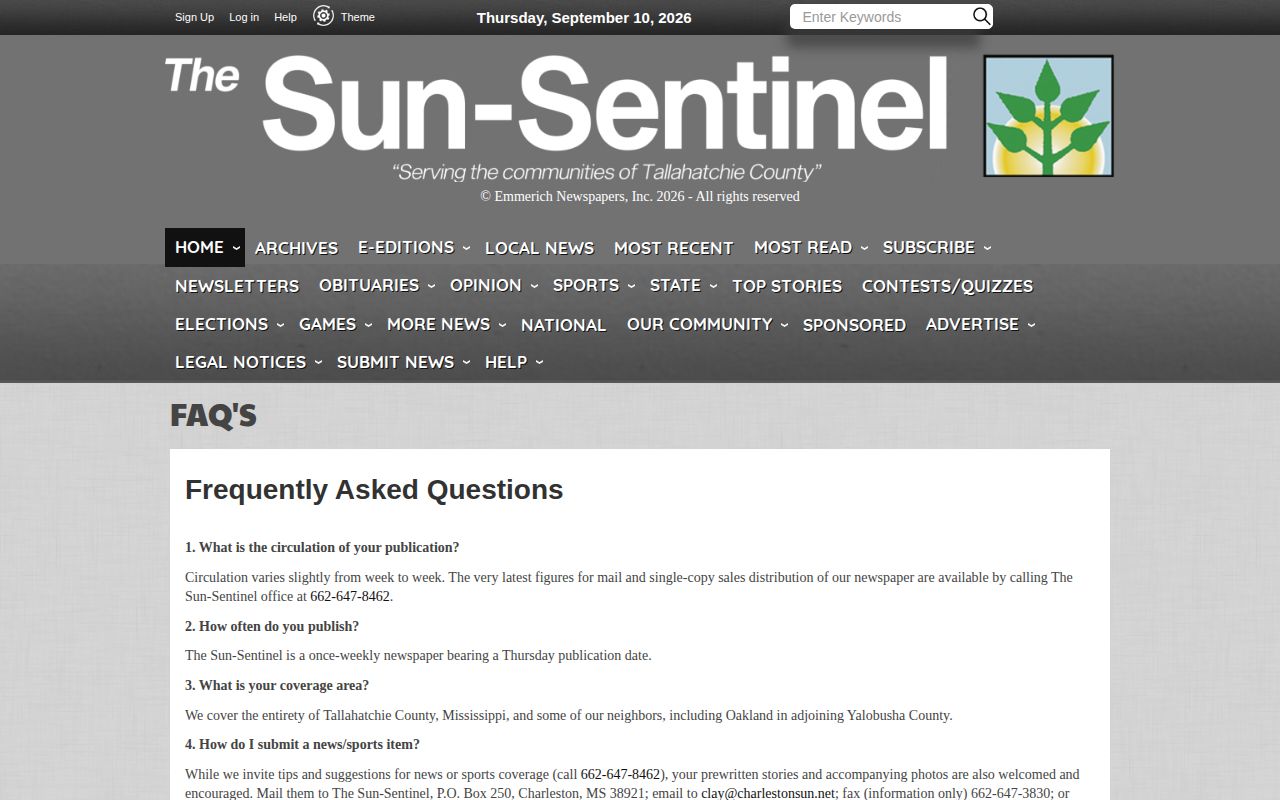
That publishing schedule explains delays, but it also shows why news coverage can't serve as a live booking log.
Archive and Retention Questions
The sheriff's office posts no jail-docket or booking-photo retention schedule online. Ask whether records live on paper, in an agency database, or in a vendor system. Request the earliest date available. Ask for the retention schedule and archiving details. An unofficial site carrying old names isn't a complete county archive.
For history, try the Mississippi Department of Archives and History. Its Tallahatchie finding aid covers county records from 1830 through 1939. Those holdings are research routes, not modern arrest feeds. The two-district county structure may split older material as well. The Sun-Sentinel Crime section adds selective dated reporting.

Keep a story's publication date and agency attribution. It can't supply missing bond, intake, or release details.
Two Districts Shape Arrest Records
Charleston and Sumner both serve as county seats. State sources list separate first- and second-district phone lines. The sheriffs' association gives 662-647-3700 as the primary contact, and the numbers likely serve different functions, so don't invent a records line from them. Start with the primary number, state your date range, and follow the routing.
Tutwiler's official town police page lists 662-345-0057 for reports and copies. It publishes no arrest history. Charleston has no official city blotter. Sumner has no verified municipal arrest page either. A police incident report and a county booking entry may sit with different custodians. The Tutwiler Police Department page documents the municipal report channel.
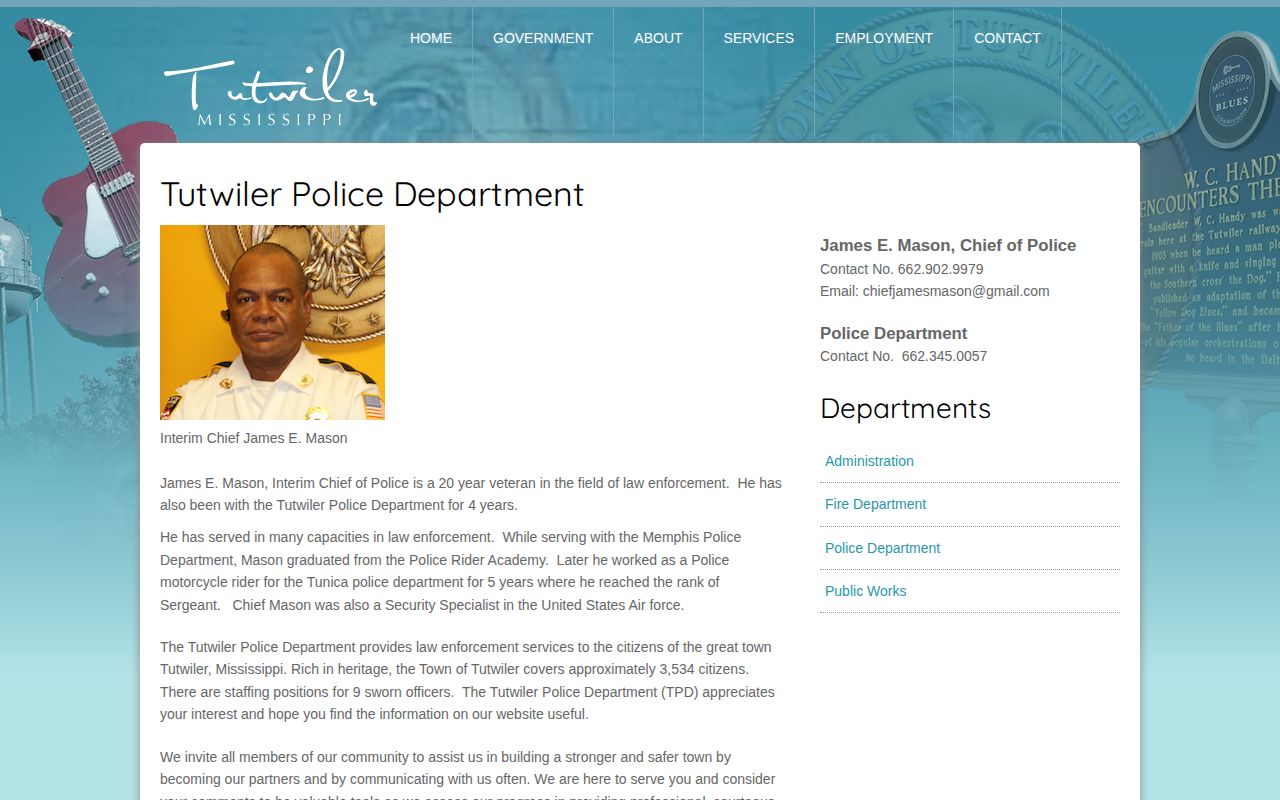
Use that channel for a Tutwiler report. Then ask the sheriff where the booking and release entries live.
News Blotters Are Selective
The Sun-Sentinel covers Tallahatchie County, but editors choose what runs, and weekly publication rules out a complete arrest ledger. Save the story's date, headline, byline, and attribution. When the court outcome matters, search the court record. Silence in the paper never proves an arrest didn't happen.
Unofficial county-name databases can be stale, partial, or copied from elsewhere. Don't use them to count county trends or find everyone arrested. No verified Tallahatchie page appears on several popular aggregators. Guessing a URL pattern from another county leads nowhere.
Verify Each Arrest Log Entry
Keep the incident, arrest, intake, release, and publication dates separate. A newspaper date can trail every government event. A release may fall outside your range even when the booking sits inside it. Request both intake and release fields. That makes a bounded Tallahatchie arrest log genuinely useful without assuming the county keeps one combined report.
Next, check the proper court docket for arraignment, bond changes, dismissal, plea, trial result, or sentence. The recorded outcome may not match the booking charge. If someone later enters state custody, use MDOC. Federal BOP and immigration locators run separate systems and can't fill a county blotter gap.
Records can be corrected, sealed, or expunged. Begin corrections with the sheriff or arresting agency. Use the court result as your proof. An old third-party copy goes through its documented correction path. No paid-removal vendor is endorsed.
Preserve a Reproducible Date Range
Keep good notes as you go. Record the start and end dates of your request. Note the agency you contacted and the exact record names you asked for. Log the response date as well. If an office says a different body keeps the Tallahatchie County arrest log, ask for that custodian's name and contact route. That trail beats repeated searches of an unofficial page whose coverage and update rules stay unknown. For photos, request the booking photograph tied to a named intake, if the office can release it. Tallahatchie County publishes no photo or retention policy. An old newspaper image, in short, is not a complete sheriff archive.
Note: Keep the requested range tied to booking dates, not the date a website uploads a record.